

 My Account
 Our Story
 The Science
 Shipping Information
 Returns
 FAQ
FAQ VIP Rewards
 Contact Us

How to Tell If Your Vitamin C Serum Is Still Active
Knowing how to tell if your vitamin C serum is still good is one of the most practical skills a skincare user can have — because an oxidized serum looks almost identical to an active one until you know what to look for. L-ascorbic acid is the only form of vitamin C with demonstrated efficacy in skin, and it is also among the most chemically fragile actives in modern skincare. Once it degrades, it stops working. No brightening support. No collagen synthesis signaling. Nothing. This guide gives you the exact tools to evaluate your serum before you apply it.
Why Vitamin C Serum Activity Is So Easy to Lose
L-ascorbic acid oxidizes on contact with air, heat, and UV light. When it does, it converts first to dehydroascorbic acid and then to diketogulonic acid — neither of which has any meaningful skin benefit. The molecule that was actively supporting collagen synthesis and neutralizing free radicals is simply gone, replaced by inert breakdown products.
The same chemistry that makes L-ascorbic acid effective also makes it unstable. It must be formulated at a pH below 3.5 to penetrate the stratum corneum and reach viable skin cells. At that low pH, it is bioavailable. But that acidic environment also accelerates its reaction with oxygen. The margin between "effective" and "degraded" is narrow, and it narrows further with every day of improper storage.
Some consumers turn to vitamin C derivatives — ascorbyl glucoside, magnesium ascorbyl phosphate, tetrahexyldecyl ascorbate — partly because they are marketed as more stable. They are, in a sense. But stability in a bottle does not equal efficacy on skin. Derivatives have consistently failed to match pure L-ascorbic acid's documented clinical performance, and stability that comes at the cost of bioavailability is not a meaningful trade. The answer to oxidation is not switching to an inferior molecule. It is understanding and managing the conditions that cause degradation.
The Color Test: What Each Shade Actually Means
Color is the fastest, most reliable at-home indicator of vitamin C serum activity. Here is what each stage looks like:
Clear to very pale straw yellow: This is a fresh, fully active serum. L-ascorbic acid in a properly formulated water-based vehicle is essentially colorless to faintly yellow. This is what you want.
Light gold or warm yellow: Early-stage oxidation has begun. The serum retains some activity but is declining. Continue using it, and prioritize finishing the bottle quickly. Do not leave it on the shelf for another month.
Amber, orange, or brown: Significant oxidation has occurred. The majority of the active L-ascorbic acid has degraded. Using the serum will not cause harm, but it will not deliver the results you are expecting. Discard and replace.
A calibration note: some Phyto-C serums contain vitamin E (alpha-tocopherol) or bioflavonoids, which can give the formula a slightly warmer baseline color straight out of the bottle. E in C Advanced and E in C Lite — formulated by Dr. Eddie Omar to solubilize high concentrations of fat-soluble vitamin E in a water-based vehicle — may appear slightly more golden than a pure L-ascorbic acid serum. Know your baseline at the time of opening so you can accurately track any color shift over time. Serum Twenty and Serum Fifteen, which contain no vitamin E, offer the cleanest visual baseline for color tracking.
The Smell, Texture, and Skin-Feel Tests
Color tells most of the story, but smell and texture add supporting evidence.
Smell: A fresh, active L-ascorbic acid serum smells faintly acidic — sometimes described as lightly citrus-adjacent, sometimes essentially neutral. What it should not smell like is metallic, vinegary, or chemically sharp. An off odor signals the presence of breakdown byproducts and confirms what a color shift may have already suggested.
Texture: A properly formulated vitamin C serum should have a consistent, smooth texture. Cloudiness, unexpected thickening, or visible separation are signs of formula instability. These changes may not always indicate oxidation specifically, but they indicate the formula is no longer behaving as intended.
The sting test: A properly pH-balanced, active L-ascorbic acid serum may produce mild transient tingling on application — this is normal and reflects the low pH doing its job at the skin surface. What is not normal is a sharp, prolonged burning sensation on intact skin. That can signal pH drift, formula degradation, or contamination introduced through repeated open-air exposure. Mild tingling: expected. Genuine discomfort that does not resolve within seconds: investigate further.
Does an At-Home pH Strip Test Actually Work?
pH strips can give you a rough directional read, but they are imprecise tools for this purpose. A serum should register between pH 2.5 and 3.5 on a strip to indicate it is in the active zone. If your strip reads above pH 4.0, that suggests the formula has drifted — possibly through contamination, dilution from water or other products introduced into the bottle, or genuine degradation of the acid system.
The important limitation: pH and oxidation state are not the same measurement. A serum can still read at the correct pH while being substantially oxidized. The L-ascorbic acid molecule degrades without necessarily altering the overall pH of the formula. So a good pH reading is reassuring but not conclusive. Color change remains the more direct proxy for oxidation state.
Professional stability testing — HPLC analysis, accelerated degradation studies, and controlled oxidation assays — is the only definitive method. Phyto-C conducts this testing in-house as part of the formulation process. At home, you are working with useful approximations, not precise assays. Treat them as early warning indicators, not diagnostic certainty.
Storage Habits That Accelerate Oxidation — and How to Slow It
Heat is the single fastest oxidation accelerator. A bathroom cabinet near a shower — cycling between warm, humid air and cooler ambient temperatures — is one of the worst places to store an L-ascorbic acid serum. Summer conditions are particularly damaging, especially in climates where indoor temperatures rise throughout the day.
UV light degrades L-ascorbic acid rapidly. Amber or opaque packaging slows this process, but placement matters more than packaging. A clear-glass serum stored in a dark drawer will outlast an amber-glass serum left on a sunny bathroom counter.
Air exposure is the other primary driver. Close the cap immediately after dispensing. Pump dispensers offer meaningful protection over open dropper-top designs because they minimize oxygen contact with the bulk of the formula. Never mix your vitamin C serum with other products in your palm before applying — introducing even trace contaminants accelerates oxidation from the moment of contact.
Refrigerator storage extends the active life of L-ascorbic acid serums meaningfully. Phyto-C recommends cool, dark storage for all vitamin C formulations. The refrigerator is the most reliable way to achieve and maintain that environment consistently.
How to Interpret a Comparison Table: Active vs. Oxidized Serum
| Indicator | Active (Use) | Early Oxidation (Use Quickly) | Fully Oxidized (Discard) |
|---|---|---|---|
| Color | Clear to pale straw yellow | Light gold or warm yellow | Amber, orange, or brown |
| Smell | Faintly acidic or neutral | Slightly sharper than usual | Metallic, vinegary, or off |
| Skin feel | Mild transient tingle | Tingling slightly more pronounced | Flat — no tingle, or sharp discomfort |
| pH (strip estimate) | 2.5–3.5 | 2.5–3.5 (may start drifting) | Above 4.0 or inconsistent |
| Expected activity | Full — apply with confidence | Partial — finish within 2–3 weeks | Negligible — replace the bottle |
Using an oxidized serum is unlikely to cause skin harm. But it will not deliver the collagen-supporting, skin-brightening benefits you are relying on it to provide. There is no compelling reason to continue using a degraded product.
Phyto-C uses a bioflavonoid stabilization system — not ferulic acid — across its vitamin C formulations. Ferulic acid, commonly used by other brands as a stabilizer, has been shown in peer-reviewed research (Lee, 2005, Archives of Pharmacal Research) to induce dose-dependent generation of reactive oxygen species via NADPH oxidase activation. Phyto-C's position is that this pro-oxidant risk is incompatible with a formula designed to deliver antioxidant benefit. Bioflavonoids extend the active window without that tradeoff.
Which Phyto-C Vitamin C Serums Have the Longest Active Window?
Serum Twenty and Serum Fifteen: These alcohol-free formulas contain 20% and 15% L-ascorbic acid respectively, stabilized with bioflavonoids and sodium hyaluronate. Their clean, pale baseline makes color tracking straightforward — they are among the easiest serums to self-monitor at home.
E in C Advanced and E in C Lite: Dr. Eddie Omar's novel formulations solve a long-standing formulation challenge: solubilizing meaningful concentrations of fat-soluble vitamin E in a water-based vehicle. The vitamin E co-antioxidant contributes to oxidative stability and may extend the serum's active window. These formulas may appear slightly more golden at opening — that warmth comes from tocopherol, not oxidation. The vitamin C and E synergy also provides documented photoprotective support.
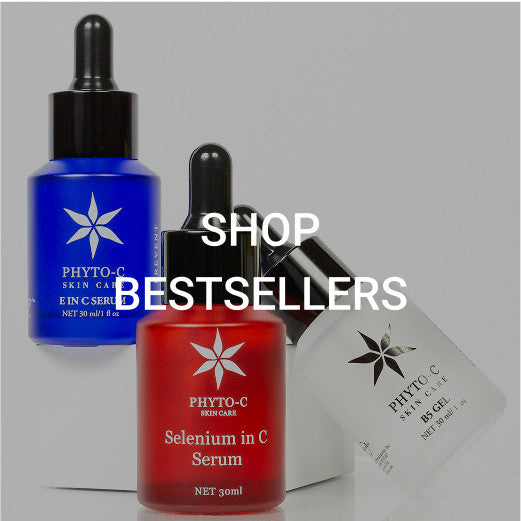
Selenium in C: Dr. Mostafa Omar's triple antioxidant formula combines 15% L-ascorbic acid with vitamin E and selenium (L-selenomethionine). The additional antioxidant layer provides enhanced oxidative protection that may slow the rate of degradation compared to a single-antioxidant formula.
Across all Phyto-C vitamin C serums, the same principles apply: store cool and dark, close immediately after use, and track color from the day you open the bottle.
Frequently Asked Questions
My vitamin C serum turned yellow — is it still safe to use?
A light yellow or pale gold color indicates early-stage oxidation. The serum retains some activity but is declining. It is safe to apply — oxidized L-ascorbic acid does not damage skin — but you should prioritize finishing the bottle within the next two to three weeks rather than treating it as a long-term supply.
Can I still use a vitamin C serum that has turned orange or brown?
An orange or brown serum has undergone significant oxidation and retains minimal active L-ascorbic acid. Applying it will not cause harm, but it will not deliver meaningful brightening or collagen-supporting activity. The practical recommendation is to discard it and open a fresh bottle stored under better conditions.
How long does an opened vitamin C serum stay active?
An opened L-ascorbic acid serum stored properly — in a cool, dark location with the cap closed immediately after use — typically remains active for two to three months. Improper storage (heat, light, air exposure) can compress that window to weeks. Refrigerator storage is the most reliable way to extend the active period.
Does refrigerating vitamin C serum actually help extend its life?
Yes. Cool temperatures meaningfully slow the oxidation rate of L-ascorbic acid. Phyto-C recommends cool, dark storage for all vitamin C formulations, and the refrigerator is the most consistent way to maintain those conditions. Allow the serum to reach room temperature before applying if cold application causes sensory discomfort.
Why does my vitamin C serum oxidize faster in summer?
Heat is the primary accelerant of L-ascorbic acid oxidation. Higher ambient temperatures in summer — especially in bathrooms and on countertops near windows — dramatically increase the rate of molecular breakdown. Summer storage requires more deliberate care: keep the serum refrigerated or in the coolest, darkest location available, and avoid leaving it in cars or near heat sources.
The condition of your vitamin C serum at the moment of application determines whether it works. Starting with a well-formulated serum — like Serum Twenty, built on Dr. Mostafa Omar's NCI-funded research into topical L-ascorbic acid — gives you the strongest possible foundation. Protecting that formulation through proper storage and regular visual monitoring ensures that foundation continues to deliver results every time you apply it.
 Next Post