
 My Account
 Our Story
 The Science
 Shipping Information
 Returns
 FAQ
FAQ VIP Rewards
 Contact Us


Vitamin C Serum: How to Choose the Right One for Your Skin
Knowing how to choose a vitamin C serum can mean the difference between visible, lasting results and a bottle of oxidized liquid that does nothing for your complexion. With hundreds of formulas on the market — each claiming superiority — the decision comes down to a handful of science-backed factors: the form of vitamin C used, its concentration, pH, stability, and how well it matches your skin type. This guide breaks down each factor so you can invest with confidence.
Why Vitamin C Is the Gold Standard Antioxidant in Skincare
L-ascorbic acid is the most extensively studied topical antioxidant in dermatological literature. Its primary role in skincare is neutralizing free radicals — unstable molecules generated by UV exposure, pollution, and other environmental stressors — before they can contribute to visible signs of photoaging such as fine lines, uneven tone, and loss of firmness.
The clinical evidence behind topical vitamin C is unusually strong for a cosmetic ingredient. Research funded by the National Cancer Institute (NCI) and published in the Journal of the American Academy of Dermatology (JAAD) demonstrated that L-ascorbic acid, when formulated at an optimal low pH, supports collagen synthesis and helps protect skin against oxidative stress at the cellular level. This foundational work was conducted by Dr. Mostafa Omar, the scientist who invented liquid L-ascorbic acid for topical use and holds two patents on the technology — research that ultimately became the scientific basis for the modern vitamin C serum category.
Not all forms of vitamin C are equal. Derivatives such as ascorbyl glucoside, magnesium ascorbyl phosphate (MAP), and ascorbyl palmitate are more stable but require enzymatic conversion in the skin to become active L-ascorbic acid. This conversion is often incomplete and inefficient. If you are looking for the best vitamin C serum for your face, the form of vitamin C should be your first filter: L-ascorbic acid in its direct, liquid form remains the benchmark against which all derivatives are measured.
The Science of Concentration: How Much Vitamin C Does Your Skin Need?
Peer-reviewed research consistently points to a concentration range of 10–20% L-ascorbic acid as the clinically validated sweet spot for topical vitamin C benefits. Below 10%, the antioxidant activity may be insufficient to produce visible improvement. Above 20%, studies show diminishing returns — irritation risk increases without a proportional increase in efficacy, as the skin reaches a saturation threshold.
This is why concentration should match your skin's tolerance profile rather than following a "more is better" logic. Serum Fifteen delivers 15% L-ascorbic acid, making it an excellent starting point for those building tolerance or with mildly reactive skin. Serum Twenty delivers the full 20% concentration — the upper boundary of the proven effective range — formulated for those who want maximum antioxidant intensity without crossing into irritation territory.
If you have never used an L-ascorbic acid serum before, starting at 15% for four to six weeks and then graduating to 20% is a sound strategy recommended by many skincare professionals.
pH, Stability, and Absorption: The Formulation Factors That Actually Matter
Concentration means nothing if the formula cannot penetrate the stratum corneum. L-ascorbic acid requires a pH below 3.5 to remain in its uncharged, lipid-soluble form — the only form capable of meaningful skin absorption. Serums formulated at higher pH levels may list L-ascorbic acid on the label but deliver a fraction of its potential.
Stability is the second critical factor. L-ascorbic acid is notoriously prone to oxidation when exposed to air, light, or heat. You can identify a degraded vitamin C product by its color and smell: a fresh L-ascorbic acid serum should be clear to very pale straw-colored. If it has turned deep yellow, amber, or brown, or develops an off-putting metallic or acidic odor, the active ingredient has oxidized and the serum is no longer effective.
This is where formulation expertise matters most. The liquid L-ascorbic acid technology pioneered by Dr. Mostafa Omar was specifically designed to maximize bioavailability — the amount of active vitamin C that actually reaches living skin cells. Compared to powder-based, encapsulated, or derivative-based approaches, a properly formulated liquid L-ascorbic acid serum like Serum Twenty delivers the active in its most direct, absorbable state. Store your serum in a cool, dark place and use it within the recommended timeframe to preserve potency.
Matching Vitamin C Serum Strength to Your Skin Type and Concern
Understanding your skin type is essential when selecting the right vitamin C serum for your routine. Here is how to approach it based on your primary concern:
Sensitive or Reactive Skin
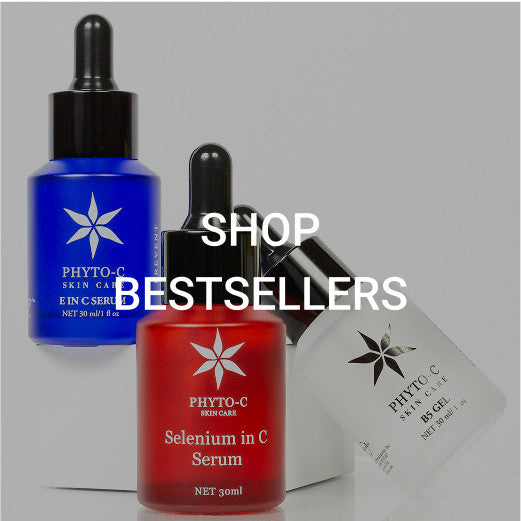
Start with a lower concentration like the 15% L-ascorbic acid in Serum Fifteen, and pair it with barrier-supporting hydration. A panthenol-rich formula such as B5 Gel can help support the skin's moisture barrier and promote a more comfortable, balanced complexion during the adjustment period.
Hyperpigmentation and Sun Damage
For those focused on visibly brightening uneven tone and helping minimize the look of dark spots, a higher-strength L-ascorbic acid serum works best when combined with complementary antioxidants. Vitamin E and selenium enhance vitamin C's antioxidant synergy — a combination available in Selenium in C Serum. For vitamin C plus vitamin E synergy, E in C Advanced pairs both actives for enhanced environmental defense.
Aging and Loss of Firmness
To help improve the appearance of fine lines and support a firmer, more resilient-looking complexion, combine your vitamin C serum with collagen-supporting actives. Layering Serum Twenty with a peptide-rich formula like Hyper Lift creates a complementary routine targeting multiple visible signs of aging. Adding a retinol product such as Retinol 0.5% in your evening routine can further support skin renewal — just apply them at separate times of day.
Oily or Acne-Prone Skin
Lightweight, gel-based delivery systems are preferable over heavy creams for oily skin types. L-ascorbic acid serums are inherently water-based, making them well-suited to oily complexions. Follow with a non-comedogenic hydrator like Phyto Gel to maintain hydration without adding excess oil.
How to Layer Vitamin C Into Your Skincare Routine (Without Mistakes)
The optimal time to apply your vitamin C serum is in the morning, on clean skin, before moisturizer and sunscreen. This layering sequence maximizes the synergy between topical antioxidant defense and UV protection — your serum helps neutralize free radicals generated by sun exposure while your SPF blocks UV rays directly. Together, they offer a more comprehensive approach to helping protect against environmental stressors than either step alone.
What not to layer with vitamin C: Avoid applying benzoyl peroxide at the same time as your L-ascorbic acid serum, as it can oxidize and deactivate the vitamin C. High-pH cleansers can also temporarily raise the skin's surface pH, reducing L-ascorbic acid absorption. Use a gentle, pH-appropriate cleanser like Soothing Cleanser before application for best results. If you use retinoids, apply them in the evening rather than mixing them with your morning vitamin C step.
Frequency: Daily use is safe and recommended for most skin types once initial tolerance is established. Most people can use a 15–20% L-ascorbic acid serum every morning without issue after a brief adjustment period of one to two weeks.
With spring in full effect and UV index rising through April 2026, reinforcing your antioxidant defense layer is especially critical. Longer daylight hours mean more cumulative UV exposure — making a consistent morning vitamin C routine more relevant now than at any other point in the year.
Frequently Asked Questions
What percentage of vitamin C serum is most effective for beginners?
A 15% L-ascorbic acid concentration is generally the best starting point for beginners. It falls within the clinically studied effective range of 10–20% while minimizing the risk of irritation. After four to six weeks of consistent use without adverse reaction, most people can comfortably move to a 20% formula.
Can I use vitamin C serum every day without irritating my skin?
Yes, most skin types tolerate daily vitamin C serum application once an initial tolerance period of one to two weeks has passed. If you experience tingling or mild redness when starting, apply every other day and gradually increase to daily use. Pairing with a hydrating product like Hyper Hydrate can help support comfort during the adjustment phase.
What is the difference between L-ascorbic acid and vitamin C derivatives?
L-ascorbic acid is the pure, biologically active form of vitamin C. Derivatives such as ascorbyl glucoside, MAP, and ascorbyl palmitate must be converted into L-ascorbic acid by the skin before becoming active, and this conversion is often incomplete. L-ascorbic acid delivers the most direct antioxidant activity when formulated at the correct pH and concentration.
How do I know if my vitamin C serum has oxidized and is no longer effective?
A fresh L-ascorbic acid serum is clear to very light straw in color. If the serum has turned dark yellow, amber, or brown, it has oxidized and the active ingredient has degraded. An unusual metallic or sharp acidic smell also indicates oxidation. Oxidized vitamin C serum should be discarded, as it no longer provides meaningful antioxidant benefits.
Should I apply vitamin C serum in the morning or at night?
Morning application is recommended for most people because vitamin C's antioxidant properties help neutralize free radicals generated by daytime UV exposure and pollution. Applying L-ascorbic acid serum before sunscreen creates a synergistic defense against environmental stressors. While nighttime use is not harmful, you lose the daytime photoprotection synergy that makes morning application most strategic.
Choosing the right vitamin C serum is ultimately a decision about formulation science — the form, concentration, pH, and stability of the active ingredient matter far more than marketing claims. Explore Serum Twenty and the full Phyto-C collection to find the formula backed by the scientist who started it all.
 Next Post